
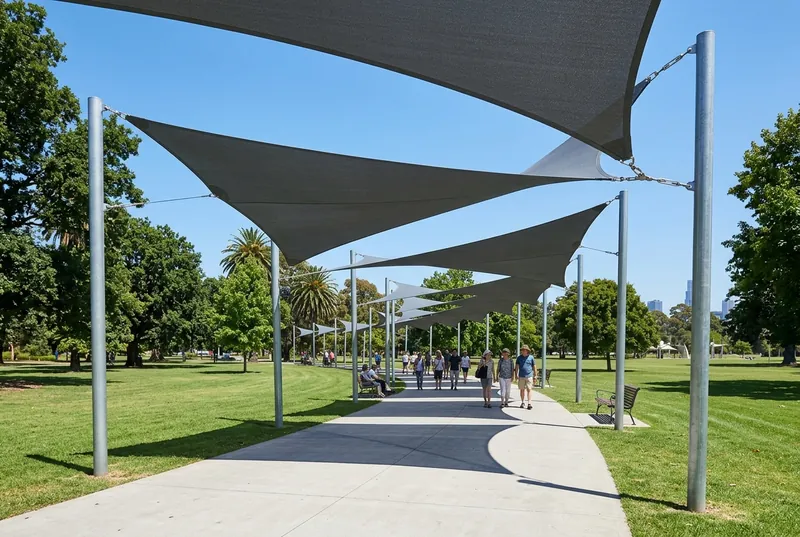
Wind is the design load
A tensioned sail acts like, well, a sail. Wind adds load on top of the tension already in the fabric, and that load goes straight into the corners, posts and footings. Breathable HDPE lets some air pass through, which helps, but posts and anchors still have to be designed for real gusts.
Arizona monsoons
Monsoon storms from roughly mid-June through September bring sudden outflow winds; the National Weather Service regularly warns of gusts of 60 mph or more in severe storms. Two sensible approaches:
- Engineered structures — posts, footings and hardware designed for your site’s code wind speed so the sail can stay up.
- Residential sails on lighter anchors — quick-release hardware so the sail comes down before a severe storm.
When you need engineering
Commercial projects, public spaces, playgrounds, larger residential sails and anything on new posts benefit from structural engineering to the building code (ASCE 7 wind loads, as adopted by your jurisdiction). Engineering sizes the posts, footings and connections — and is usually what the permit office wants to see.
Permits in the Valley
Requirements vary by city and by project, so always check with your local building department. In general:
- Permanent structures on concrete footings — especially commercial, public and larger residential structures — commonly require a building permit.
- Setbacks, lot coverage and height limits may apply.
- HOAs frequently require architectural approval regardless of the city’s rules.
On our turnkey installs we check the requirements for your address, provide engineering and handle the permit and inspections.